
Because managing high blood pressure can feel overwhelming, one of the first questions people ask after starting treatment is how long does blood pressure medicine take to work? It’s a fair question—and an important one. You want to know when your medication will kick in, how it will make you feel, and whether it’s actually doing its job.
The short answer is that it depends on the type of medication, your body, and how consistently you take it. Some blood pressure medications start working within hours, while others take days or even weeks to show full effects. In this article, we’ll break it all down in simple, practical terms so you know what to expect and when.
How Blood Pressure Medication Works
Blood pressure medications don’t all work the same way. Each class targets a different process in your body that affects blood pressure levels.
Common mechanisms include:
-
Relaxing blood vessels to improve blood flow
-
Reducing fluid buildup in the body
-
Slowing the heart rate
-
Blocking hormones that raise blood pressure
Because these processes vary, the time it takes to see results can differ significantly from one medication to another.
How Long Does Blood Pressure Medicine Take to Work?
Short Answer: Anywhere from Hours to Weeks
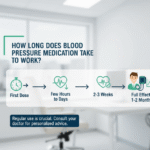
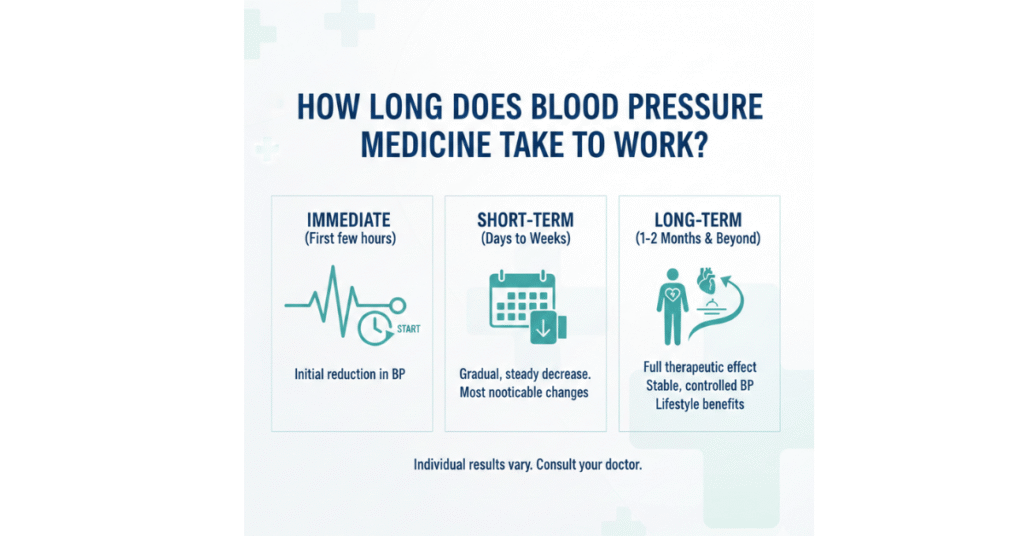
Most people will see some change within the first few days, but reaching a stable, controlled blood pressure often takes longer.
Here’s a general timeline:
-
Within hours: Initial effects may begin (especially with fast-acting drugs)
-
1–3 days: Noticeable blood pressure reduction for many medications
-
1–2 weeks: Blood pressure becomes more consistent
-
4–6 weeks: Full therapeutic effect for most long-term medications
Doctors usually evaluate effectiveness after several weeks, not days.
Blood Pressure Medication by Type and Speed
Fast-Acting Blood Pressure Medications
These often work quickly and may lower blood pressure within hours:
-
ACE inhibitors (e.g., lisinopril)
-
Calcium channel blockers (e.g., amlodipine)
-
Beta blockers (e.g., metoprolol)
You might not feel anything different, but your readings may improve quickly.
Medications That Take Longer to Work
Some medications need time to build up in your system:
-
Thiazide diuretics
-
Angiotensin II receptor blockers (ARBs)
-
Extended-release formulations
These typically reach full effectiveness after 2–4 weeks.
When Will You Start Feeling Better?
Lower blood pressure doesn’t always come with noticeable symptoms—especially if you didn’t feel unwell to begin with. However, some people report:
-
Fewer headaches
-
Less dizziness
-
Improved energy levels
-
Reduced chest pressure
On the flip side, mild side effects like fatigue or lightheadedness can happen early on and usually fade as your body adjusts.
Factors That Affect How Quickly Blood Pressure Medicine Works
Several personal factors influence how fast your medication works:
-
Dosage and medication type
-
Consistency in taking the medicine
-
Diet and sodium intake
-
Exercise habits
-
Stress levels
-
Other medical conditions
-
Age and metabolism
Skipping doses or taking medication inconsistently can significantly delay results.
Why Your Blood Pressure May Not Drop Right Away
If you’re wondering why your readings aren’t improving yet, don’t panic. This is common.
Possible reasons include:
-
Your body is still adjusting
-
The dose needs tweaking
-
You may need a combination of medications
-
Lifestyle factors are interfering
Doctors often adjust treatment gradually to avoid sudden drops that could cause side effects.
How to Help Blood Pressure Medicine Work Better
Medication works best when paired with healthy habits. Small changes can make a big difference.
Try to:
-
Reduce salt intake
-
Stay physically active
-
Maintain a healthy weight
-
Limit alcohol
-
Manage stress
-
Monitor blood pressure at home
These steps can enhance medication effectiveness and may even reduce the dose you need over time.
FAQs About Blood Pressure Medication
How long does blood pressure medicine take to work the first day?
Some medications begin lowering blood pressure within hours, but noticeable results may take a few days.
Can blood pressure medicine work immediately?
Certain fast-acting medications can start working the same day, but full control usually takes weeks.
Why do I feel tired after starting blood pressure medicine?
Fatigue is a common early side effect and often improves within one to two weeks.
Should I stop my medication if I don’t see results?
No. Always talk to your doctor before stopping or changing blood pressure medication.
How long before doctors adjust blood pressure medication?
Most doctors reassess after 2–4 weeks unless side effects occur sooner.
Conclusion
So, how long does blood pressure medicine take to work? For most people, it’s a gradual process—starting within days and reaching full effectiveness over several weeks. Because everyone’s body responds differently, patience and consistency are key.
If you’re newly prescribed blood pressure medication, stick with it, track your readings, and keep open communication with your healthcare provider. For more guidance, explore related articles on lifestyle changes, home monitoring tips, or medication comparisons to stay informed and confident in your treatment plan.