
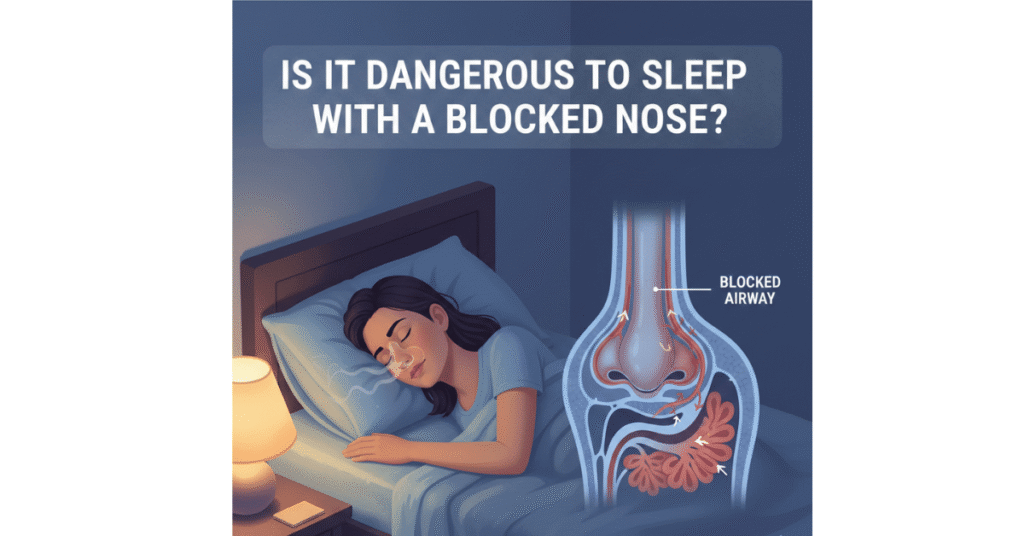

Because breathing is something we usually take for granted, a blocked nose at bedtime can feel more frustrating than serious. But many people still wonder: is it dangerous to sleep with a blocked nose, or is it just uncomfortable?
The short answer is—it depends. While a stuffy nose is often harmless, sleeping with nasal congestion can affect sleep quality, breathing, and overall health, especially if it happens often or alongside other symptoms. In this article, we’ll break down what actually happens when you sleep with a blocked nose, when it’s a problem, and how to fix it safely.
What Does a Blocked Nose Mean While Sleeping?
A blocked nose, also known as nasal congestion, happens when the tissues inside your nose become inflamed or filled with excess mucus. This makes airflow difficult, especially when you’re lying down.
Common causes include:
-
Colds or flu
-
Allergies (dust, pollen, pet dander)
-
Sinus infections
-
Deviated septum
-
Dry air or dehydration
At night, congestion often feels worse because gravity causes mucus to settle in the nasal passages.
Is It Dangerous to Sleep With a Blocked Nose?
For most healthy adults, sleeping with a blocked nose is not dangerous, but it can cause secondary issues if it happens frequently or severely.
Potential Risks Include:
-
Poor sleep quality due to mouth breathing
-
Snoring or sleep disruptions
-
Dry mouth and sore throat
-
Headaches and fatigue the next day
In certain situations, nasal blockage can become more concerning—especially for children, people with asthma, or those with sleep apnea.
How a Blocked Nose Affects Your Breathing at Night
When your nose is blocked, your body automatically switches to mouth breathing. While this keeps oxygen flowing, it’s not ideal for long periods.
Problems Linked to Mouth Breathing:
-
Reduced oxygen efficiency
-
Increased snoring
-
Higher risk of throat irritation
-
Worsened sleep apnea symptoms
Over time, chronic mouth breathing may even affect dental health and jaw alignment.
When Sleeping With a Blocked Nose Becomes a Problem
You Should Be Cautious If:
-
Congestion lasts longer than 10 days
-
You wake up gasping or choking
-
You experience chest tightness or wheezing
-
Nasal blockage is paired with high fever or facial pain
In these cases, the question “is it dangerous to sleep with a blocked nose” becomes more relevant, and medical advice is recommended.
Is It More Dangerous for Certain People?
Children and Babies
Infants rely heavily on nasal breathing. Severe congestion can interfere with feeding and sleep and should be addressed quickly.
People With Sleep Apnea
Nasal blockage can worsen apnea episodes by increasing airway resistance.
Asthma and Allergy Sufferers
Blocked nasal passages can trigger nighttime asthma symptoms or allergic reactions.
Safe Ways to Sleep Better With a Blocked Nose
The good news? There are simple and effective ways to reduce congestion at night.
Try These Proven Remedies:
-
Use a humidifier to keep air moist
-
Elevate your head with an extra pillow
-
Take a warm shower before bed
-
Use saline nasal sprays or rinses
-
Stay hydrated throughout the day
Avoid overusing nasal decongestant sprays, as they can cause rebound congestion.
Because Comfort Matters: Can You Sleep Safely With a Blocked Nose?
Because the body adapts well, occasional nasal congestion isn’t dangerous for most people. However, chronic or severe blockage should never be ignored, especially if it affects breathing or sleep quality night after night.
FAQs: Sleeping With a Blocked Nose
Is it dangerous to sleep with a blocked nose every night?
Yes, long-term nasal congestion can lead to poor sleep, chronic fatigue, and worsened breathing issues. Persistent blockage should be evaluated.
Can a blocked nose cause low oxygen while sleeping?
In severe cases or in people with sleep apnea, reduced airflow may lower oxygen levels slightly.
Why does my nose block more at night?
Lying down increases blood flow to nasal tissues and prevents mucus from draining properly.
Is mouth breathing at night harmful?
Occasional mouth breathing is fine, but chronic mouth breathing can cause dry mouth, dental issues, and poor sleep quality.
When should I see a doctor?
If congestion lasts more than 10 days, causes facial pain, or disrupts sleep regularly, medical advice is recommended.
Conclusion: Should You Worry About Sleeping With a Blocked Nose?
So, is it dangerous to sleep with a blocked nose?
Most of the time, no—but it’s definitely not something to ignore if it becomes frequent or severe.
Occasional congestion is part of life, especially during colds or allergy season. But if your blocked nose is stealing your sleep, affecting your breathing, or lingering too long, it’s worth taking action. Better sleep starts with better breathing.