

It usually starts with a mild itch or discomfort, and before you know it, you’re wondering, what’s going on with my body? If you’ve ever asked yourself how do you get a yeast infection, you’re definitely not alone. Yeast infections are extremely common, yet many people still feel confused or embarrassed talking about them.
This article breaks down exactly how yeast infections happen, what they feel like, and why certain everyday habits can trigger them. Because understanding the cause is often the first step toward prevention and relief.
What Is a Yeast Infection?
A yeast infection is caused by an overgrowth of a fungus called Candida, most commonly Candida albicans. This yeast naturally lives in the body, especially in warm, moist areas like the mouth, gut, and vagina.
Problems start when the natural balance of bacteria and yeast gets disrupted. When that balance tips, yeast can multiply quickly and cause uncomfortable symptoms.
How Do You Get a Yeast Infection?
Yeast infections don’t usually come from a single cause. Instead, they develop when multiple factors create the perfect environment for yeast to grow.
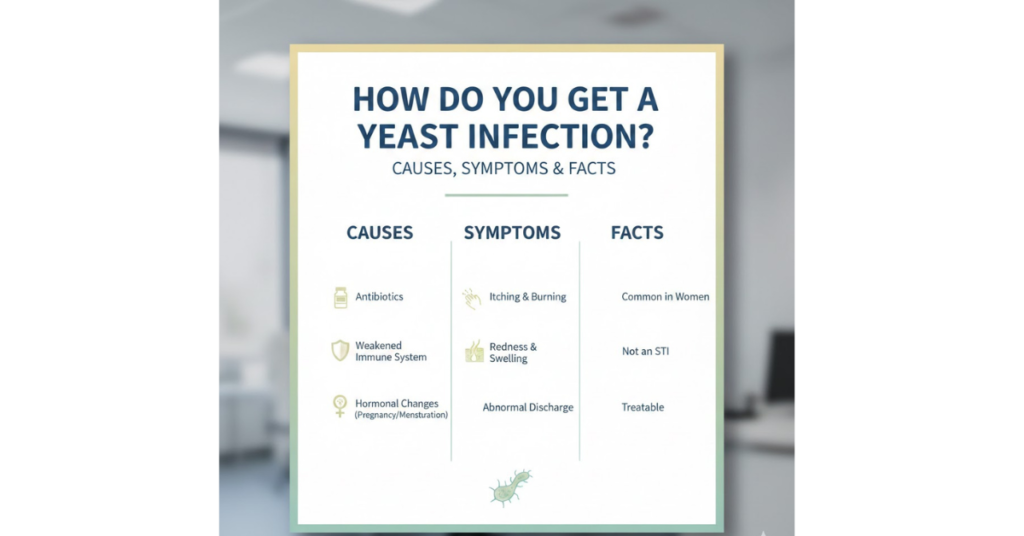
Common Causes of Yeast Infections
Here are the most common reasons yeast infections happen:
-
Antibiotic use, which kills good bacteria that normally keep yeast in check
-
Hormonal changes, such as pregnancy, menstruation, or birth control use
-
High blood sugar levels, especially in people with diabetes
-
Wearing tight or non-breathable clothing, which traps moisture
-
Weakened immune system due to illness or stress
Because yeast thrives in warm, moist environments, anything that increases moisture or reduces healthy bacteria can raise your risk.
Can You Get a Yeast Infection from Sex?
This is a common question, and the answer is a little nuanced.
Yeast infections are not considered sexually transmitted infections (STIs). However, sexual activity can still play a role.
You may get a yeast infection after sex because:
-
Friction can irritate sensitive tissue
-
Semen can change vaginal pH levels
-
Oral sex can introduce new bacteria or yeast
In some cases, partners can pass yeast back and forth, especially if infections keep returning.
What Does a Yeast Infection Feel Like?
Symptoms can range from mild to intense and often appear suddenly.
Common Symptoms Include:
-
Persistent itching or burning
-
Thick, white discharge (often described as cottage cheese-like)
-
Redness or swelling around the vagina
-
Pain during urination or sex
Because these symptoms can overlap with other infections, proper diagnosis matters.
Can You Start a Sentence With “Because”?
Yes, you absolutely can.
Because English is flexible, starting a sentence with “because” is grammatically correct as long as the thought is complete. Many modern writers do this intentionally to sound more natural and conversational—just like in this article.
Who Is Most at Risk for Yeast Infections?
Some people are more prone to yeast infections than others.
You may be at higher risk if you:
-
Have diabetes
-
Are pregnant
-
Use hormonal contraceptives
-
Take frequent antibiotics
-
Have a compromised immune system
Knowing your risk factors helps you make smarter prevention choices.
How to Prevent a Yeast Infection
Prevention doesn’t have to be complicated. Small lifestyle changes can make a big difference.
Helpful Prevention Tips
-
Wear breathable cotton underwear
-
Avoid staying in wet clothes for long periods
-
Skip scented soaps and feminine sprays
-
Maintain healthy blood sugar levels
-
Use antibiotics only when necessary
Because consistency matters, these habits work best when practiced regularly.
When Should You See a Doctor?
You should talk to a healthcare provider if:
-
It’s your first yeast infection
-
Symptoms don’t improve after treatment
-
Infections keep coming back (4+ per year)
-
You’re unsure if it’s a yeast infection or something else
Misdiagnosis can delay proper treatment, so professional advice is important.
FAQs: How Do You Get a Yeast Infection?
Can stress cause a yeast infection?
Yes. Stress weakens the immune system, making it harder for your body to control yeast growth.
Do yeast infections go away on their own?
Mild cases sometimes do, but most require antifungal treatment for full relief.
Can men get yeast infections too?
Yes, especially if they have diabetes or weakened immunity.
Are yeast infections dangerous?
They’re usually not serious, but untreated infections can worsen or recur frequently.
Can diet affect yeast infections?
High sugar intake may contribute to yeast overgrowth, especially in susceptible individuals.
Conclusion
So, how do you get a yeast infection? It usually comes down to imbalance—whether from antibiotics, hormones, moisture, or immune changes. The good news is that yeast infections are treatable and often preventable with the right knowledge and habits.