
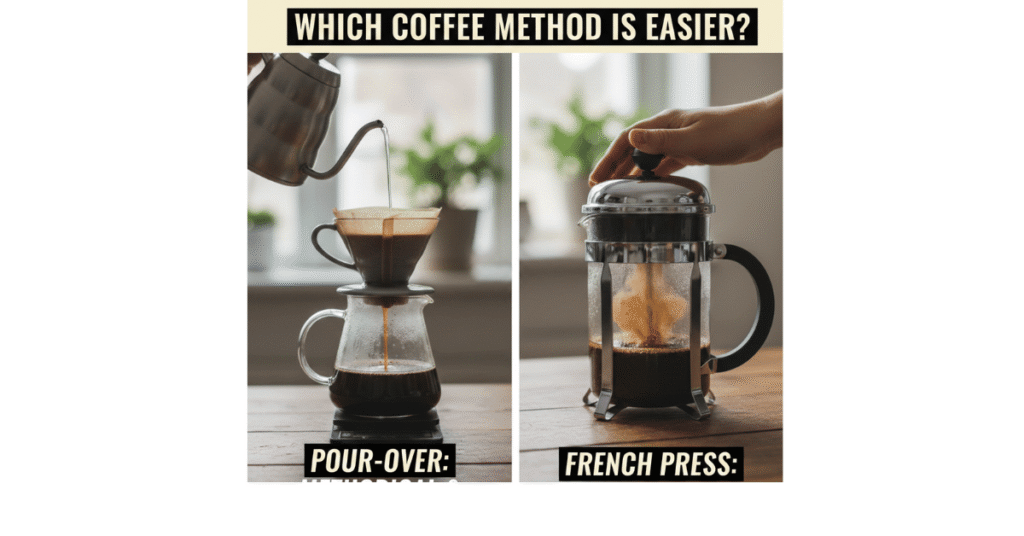

Coffee is more than just a drink—it’s a ritual, a mood booster, and for many, a lifeline to start the day. Because the way you brew coffee can dramatically affect its flavor, texture, and ease of preparation, it’s worth exploring popular methods like pour-over and French press. In this article, we’ll compare coffee brewing methods like pour-over and French press and answer the ultimate question: which one is easier to make?
What Is a Pour-Over Coffee?
Pour-over coffee is a manual brewing method where hot water is poured over coffee grounds in a filter, allowing the water to extract flavor slowly.
Key features of pour-over:
-
Uses a cone-shaped dripper (like Chemex or Hario V60)
-
Produces a clean, crisp cup of coffee
-
Requires a precise pour technique
-
Ideal for single servings or small batches
Pros:
-
Highlights delicate flavors in specialty coffee
-
Easy to control strength and extraction
Cons:
-
Slightly time-consuming
-
Requires some skill to perfect
What Is a French Press?
The French press, also known as a press pot or plunger pot, is a full-immersion brewing method where coffee grounds steep in hot water before being separated by a plunger.
Key features of French press:
-
Uses a cylindrical glass or stainless-steel carafe
-
Coffee is steeped for 3–4 minutes before pressing
-
Produces a full-bodied, rich cup of coffee
Pros:
-
Simple and beginner-friendly
-
Requires minimal equipment
-
Retains oils and flavor for a robust taste
Cons:
-
Sediment can remain in the cup
-
Coffee can over-extract if left too long
Ease of Use: Pour-Over vs French Press
Because both methods offer unique flavors, many coffee lovers wonder which is easier to make. Let’s break it down:
| Feature | Pour-Over | French Press |
| Skill Level | Intermediate | Beginner-friendly |
| Prep Time | 4–6 minutes | 4 minutes |
| Cleanup | Filter disposal + rinsing | Simple rinse of plunger and carafe |
| Consistency | Can vary with pouring technique | More consistent once steeping time is set |
Verdict: For most beginners, the French press is easier to make. You simply add coffee, pour hot water, wait a few minutes, and press. Pour-over requires more attention to water flow and timing, making it slightly trickier for newcomers.
Flavor Differences
-
Pour-Over: Light, clean, and nuanced. Perfect for tasting subtle notes in specialty beans.
-
French Press: Rich, bold, and full-bodied. Ideal if you love a heavier, more robust coffee experience.
Tips for Better Brewing
Pour-Over Tips
-
Use freshly ground coffee for maximum flavor.
-
Pre-wet the filter to remove paper taste.
-
Pour slowly in a circular motion to ensure even extraction.
French Press Tips
-
Use coarse grind to avoid over-extraction and grit.
-
Steep for 4 minutes for a balanced cup.
-
Stir gently before pressing to enhance flavor.
FAQs About Coffee Brewing Methods
Q1: Which method is faster, pour-over or French press?
French press is generally faster since you can steep multiple cups at once without carefully pouring water.
Q2: Can I make strong coffee with pour-over?
Yes, by adjusting coffee-to-water ratio and pour technique, you can brew strong coffee with pour-over.
Q3: Does French press coffee taste bitter?
It can if over-extracted. Using the right grind size and steeping time avoids bitterness.
Q4: Which method is better for single servings?
Pour-over is ideal for one cup, while French press works best for 2–4 cups at a time.
Conclusion
When you compare coffee brewing methods like pour-over and French press, the choice often comes down to skill level, taste preference, and convenience. Pour-over shines for clean, flavorful cups but requires attention and technique. French press is easier to make, beginner-friendly, and delivers a bold, satisfying coffee.