
Because high blood pressure often has no obvious symptoms, many people feel anxious after starting treatment and wonder if the medication is actually doing anything. One of the most common questions doctors hear is how long does it take for blood pressure medication to work, and the answer isn’t always as simple as “a few hours” or “a few weeks.”
Blood pressure medications work in different ways, and the timeline depends on the type of drug, your body, and how consistently you take it. In this article, we’ll break down what really happens after you start blood pressure medication, when you can expect results, and what signs show it’s working.
How Blood Pressure Medication Works in the Body
Blood pressure medications lower pressure in your arteries by targeting different systems in the body. Some relax blood vessels, others reduce fluid buildup, and a few slow the heart rate.
Common mechanisms include:
-
Relaxing blood vessel walls
-
Reducing excess sodium and water
-
Blocking hormones that tighten arteries
-
Lowering heart workload
Because each medication works differently, how long it takes for blood pressure medication to work can vary widely.
How Long Does It Take for Blood Pressure Medication to Work?
Short Answer: It Depends
Some blood pressure medications start working within hours, while others may take days or weeks to show full effects. You may see numbers improve before you actually feel any different.
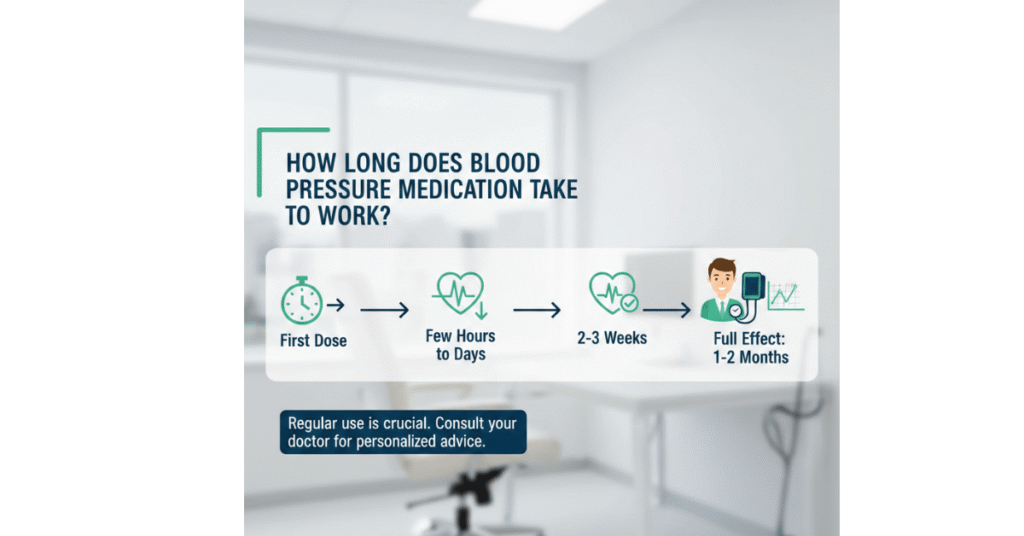
General Timeline You Can Expect
-
Within a few hours: Certain medications (like ACE inhibitors or calcium channel blockers) may begin lowering blood pressure.
-
Within a few days: Many people notice more stable readings.
-
2 to 4 weeks: Full therapeutic effects are usually reached.
-
6 to 8 weeks: Doctors may adjust dosage if goals aren’t met.
Even if you feel fine, that doesn’t mean the medication isn’t working—blood pressure often improves silently.
Blood Pressure Medication Types and How Fast They Work
Diuretics (Water Pills)
-
Start working: Within hours
-
Full effect: A few days
-
Help remove excess fluid and sodium
ACE Inhibitors
-
Start working: Within hours
-
Full effect: 2–4 weeks
-
Relax blood vessels by blocking certain hormones
Beta Blockers
-
Start working: Same day
-
Full effect: Several weeks
-
Reduce heart rate and cardiac output
Calcium Channel Blockers
-
Start working: Within hours
-
Full effect: 1–2 weeks
-
Relax and widen blood vessels
Why You Might Not Feel Immediate Results
It’s completely normal not to “feel” blood pressure medication working. High blood pressure is often called the silent condition for a reason.
You may not notice changes because:
-
Blood pressure doesn’t always cause symptoms
-
Your body needs time to adjust
-
The dose may need fine-tuning
This is why regular monitoring is essential, even when you feel okay.
Factors That Affect How Fast Blood Pressure Medication Works
Several factors influence how long it takes for blood pressure medication to work, including:
-
Your age and metabolism
-
Severity of high blood pressure
-
Medication type and dosage
-
Diet and sodium intake
-
Stress levels
-
Physical activity
-
Consistency in taking medication
Skipping doses or taking medication at different times can slow progress.
Signs Your Blood Pressure Medication Is Working
Even without symptoms, there are subtle clues your medication is doing its job:
-
Lower readings on home blood pressure monitor
-
Fewer headaches or dizziness
-
Reduced chest tightness
-
Improved energy levels
Always rely on readings, not feelings alone.
What to Do If Your Medication Isn’t Working
If your blood pressure hasn’t improved after several weeks:
-
Don’t stop taking the medication
-
Track your readings daily
-
Reduce salt and processed foods
-
Talk to your doctor about adjustments
Sometimes, it takes trying more than one medication to find the right fit.
FAQs: Blood Pressure Medication Timing
How long does it take for blood pressure medication to work the first time?
Some medications begin lowering blood pressure within hours, but full effects usually take 2–4 weeks.
Can blood pressure medication work overnight?
Yes, some drugs lower blood pressure within the first day, but consistent control takes time.
Why is my blood pressure still high after a week?
Your body may still be adjusting, or your dose may need modification.
Should I feel different when blood pressure medication starts working?
Not necessarily. Many people feel no noticeable changes despite improved readings.
Can lifestyle changes speed up results?
Absolutely. Diet, exercise, and stress management can significantly enhance medication effectiveness.
Conclusion
Understanding how long it takes for blood pressure medication to work can ease anxiety and help you stay consistent with treatment. While some medications act quickly, most require patience and regular monitoring to achieve full benefits.
Because blood pressure control is a long-term commitment, the best next step is staying informed, tracking your progress, and working closely with your healthcare provider. If you’d like to learn more, explore related articles on heart health, lifestyle changes, and medication management.