
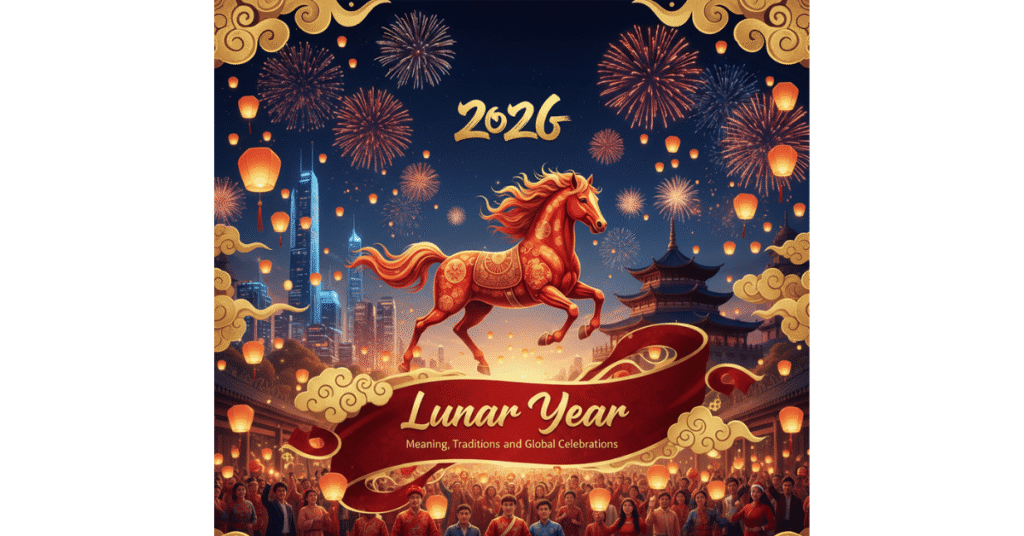

Because every new year carries a feeling of hope, Lunar New Year 2026 arrives with a powerful mix of tradition, renewal, and cultural pride. Also known as the Chinese New Year, Lunar New Year 2026 is more than just a date on the calendar—it’s a time when families reconnect, homes are refreshed, and intentions are set for the year ahead.
Celebrated across Asia and by millions worldwide, lunar new year 2026 will be observed with colorful festivals, symbolic foods, and meaningful customs that have lasted for centuries. In this article, we’ll explore what makes this year special, its zodiac significance, and how people celebrate it across the globe.
What Is Lunar New Year 2026?
Lunar New Year is based on the lunar calendar, which follows the cycles of the moon rather than the solar year. Unlike January 1, the date changes every year.
Lunar New Year 2026 Date
-
Starts: February 17, 2026
-
Ends: February 15, 2027
The celebrations typically last 15 days, ending with the Lantern Festival.
Chinese Zodiac Sign for Lunar New Year 2026
Year of the Fire Horse
Lunar New Year 2026 marks the Year of the Fire Horse, a zodiac sign known for energy, independence, and ambition.
Fire Horse Traits
-
Bold and confident
-
Highly motivated
-
Strong leadership energy
-
Passionate but sometimes impulsive
People born in Fire Horse years are often seen as natural risk-takers with magnetic personalities.
Why Lunar New Year 2026 Feels Especially Meaningful
After years of global uncertainty, Lunar New Year 2026 feels emotionally significant for many families. It represents:
-
A chance to reset personal goals
-
Renewed focus on family and health
-
Cultural reconnection after disruption
Because the Horse symbolizes movement and progress, many believe 2026 is ideal for career growth, travel, and bold decisions.
Traditional Lunar New Year Customs
1. Home Cleaning and Decorations
Before the new year begins, families clean their homes to remove bad luck and welcome good fortune.
Common decorations include:
-
Red lanterns
-
Spring couplets
-
Paper cuttings
2. Reunion Dinner
The New Year’s Eve dinner is the most important meal of the year.
Popular dishes include:
-
Dumplings (wealth)
-
Fish (abundance)
-
Rice cakes (growth)
3. Red Envelopes (Hongbao)
Red envelopes filled with money are given to children and elders as symbols of luck and protection.
How Lunar New Year 2026 Is Celebrated Around the World
Lunar New Year isn’t limited to China—it’s a global celebration.
Countries That Celebrate Lunar New Year
-
China
-
South Korea (Seollal)
-
Vietnam (Tết)
-
Malaysia & Singapore
-
United States, Canada, UK (cultural festivals)
Major cities like San Francisco, London, and Sydney host large parades and fireworks.
Lucky Colors, Numbers, and Symbols for 2026
Lucky Elements for Lunar New Year 2026
-
Colors: Red, gold, green
-
Numbers: 3, 7, 9
-
Flowers: Peach blossoms, orchids
Avoid unlucky symbols like broken items or the number four during celebrations.
Modern Lunar New Year 2026 Trends
While traditions remain strong, celebrations are evolving.
New Trends Include
-
Digital red envelopes
-
Online family gatherings
-
Sustainable decorations
-
Zodiac-themed fashion and home décor
Younger generations are blending tradition with modern lifestyles.
FAQs About Lunar New Year 2026
When is Lunar New Year 2026 celebrated?
Lunar New Year 2026 begins on February 17, 2026.
What animal represents Lunar New Year 2026?
It is the Fire Horse, symbolizing strength, speed, and independence.
How long does Lunar New Year last?
The celebration lasts 15 days, ending with the Lantern Festival.
Is Lunar New Year the same as Chinese New Year?
Chinese New Year is the most well-known Lunar New Year celebration, but many cultures observe it differently.
What should you avoid during Lunar New Year?
Avoid arguing, breaking items, or using unlucky words during the first few days.
Conclusion
Lunar New Year 2026 is more than a cultural holiday—it’s a moment of renewal, courage, and forward motion. With the Fire Horse leading the year, this is a time to take chances, reconnect with loved ones, and set meaningful goals for the future.