
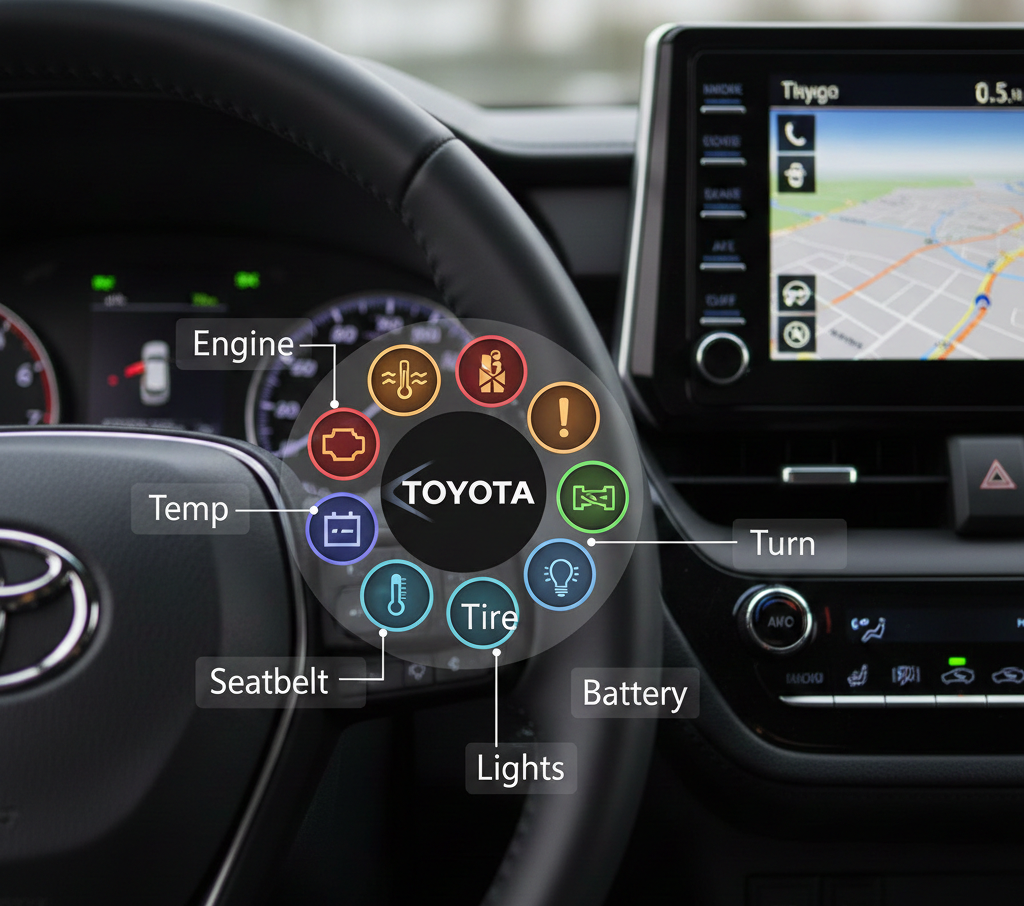

If you’ve ever glanced at your Toyota’s dashboard and noticed an unfamiliar light, you know how confusing it can be. Toyota dashboard symbols are designed to give you critical information about your vehicle’s health and safety—but only if you know what they mean. This guide will help you decode these symbols, from basic warnings to urgent alerts, ensuring you drive confidently and safely.
Understanding Toyota dashboard symbols and meanings is essential, whether you’re a new Toyota owner or an experienced driver. Let’s break down the most common indicators and what action you should take when they appear.
Common Toyota Dashboard Symbols and Their Meanings
Toyota vehicles feature a range of dashboard lights, which can be grouped into three categories: Warning Lights, Indicator Lights, and Information Lights. Here’s what each type means:
1. Warning Lights
Warning lights indicate a serious issue that needs immediate attention. Ignoring them can lead to vehicle damage or safety risks.
-
Check Engine Light (Malfunction Indicator Lamp)
![Check Engine Light]
This light signals an engine or emissions system problem. It could be as simple as a loose gas cap or as serious as a failing catalytic converter. -
Brake System Warning Light
Indicates low brake fluid or a problem with the braking system. If it stays on, pull over safely and check your brake fluid level. -
Battery/Charging Warning Light
Shows that the battery is not charging properly. Could indicate a faulty alternator or battery issue. -
Oil Pressure Warning Light
Signals low oil pressure. Stop the car immediately and check oil levels to avoid engine damage.
2. Indicator Lights
Indicator lights are informational and usually relate to the car’s operation or settings.
-
Turn Signal Indicators
Flash when using the turn signals or hazard lights. -
High Beam Indicator
Illuminates when high beam headlights are active. -
Cruise Control Indicator
Shows that cruise control is engaged. -
Seatbelt Reminder
A gentle reminder to buckle up.
3. Information Lights
These lights provide helpful updates but don’t indicate immediate danger.
-
Door Ajar Warning
Alerts that one of the doors is not properly closed. -
Low Fuel Indicator
Warns when the fuel level is getting low, giving you time to refuel. -
Tire Pressure Monitoring System (TPMS)
Alerts you when one or more tires are under-inflated, which can affect safety and fuel efficiency.
Color Codes of Toyota Dashboard Symbols
Understanding the color of dashboard lights can help you gauge urgency:
-
Red – Immediate action required. Often relates to safety or critical system failures.
-
Yellow/Amber – Caution or maintenance required soon. Check the system or schedule service.
-
Green/Blue – Informational. Indicates that a system is active or engaged.
Tips for Responding to Dashboard Symbols
Knowing what a symbol means is only half the battle. Here’s how to handle them safely:
-
Stay Calm – Don’t panic when a light comes on; assess the situation.
-
Check Your Owner’s Manual – Toyota manuals include detailed descriptions of all symbols.
-
Take Immediate Action if Red – Stop your vehicle safely and address the issue.
-
Schedule Service for Yellow/Amber Lights – Don’t ignore these; they prevent bigger problems.
-
Monitor Green/Blue Lights – These are typically reminders or status indicators, not emergencies.
FAQs About Toyota Dashboard Symbols
Q1: Why is my Toyota check engine light flashing?
A: A flashing check engine light indicates a serious engine misfire. Reduce speed and visit a mechanic immediately to avoid damage.
Q2: What does a red oil light mean on my Toyota?
A: It indicates dangerously low oil pressure. Stop the engine and check the oil level to prevent engine failure.
Q3: Can I drive with a yellow dashboard light on?
A: Yellow lights usually mean caution. You can drive for a short distance, but schedule service soon.
Q4: How do I reset Toyota dashboard symbols?
A: Some lights reset automatically after the issue is resolved. For persistent lights, consult your owner’s manual or a certified Toyota technician.
Q5: What should I do if the battery light comes on?
A: Check the alternator and battery connections. If unsure, stop driving and call for assistance to avoid being stranded.
Conclusion
Being familiar with Toyota dashboard symbols and meanings can save you time, money, and stress. Red lights mean stop and assess, yellow lights mean caution, and green or blue lights mean everything is running smoothly. By understanding these indicators, you ensure your Toyota runs safely and efficiently.
Next time a dashboard light appears, you’ll know exactly what it means and how to respond—turning potentially stressful situations into simple, manageable ones.