
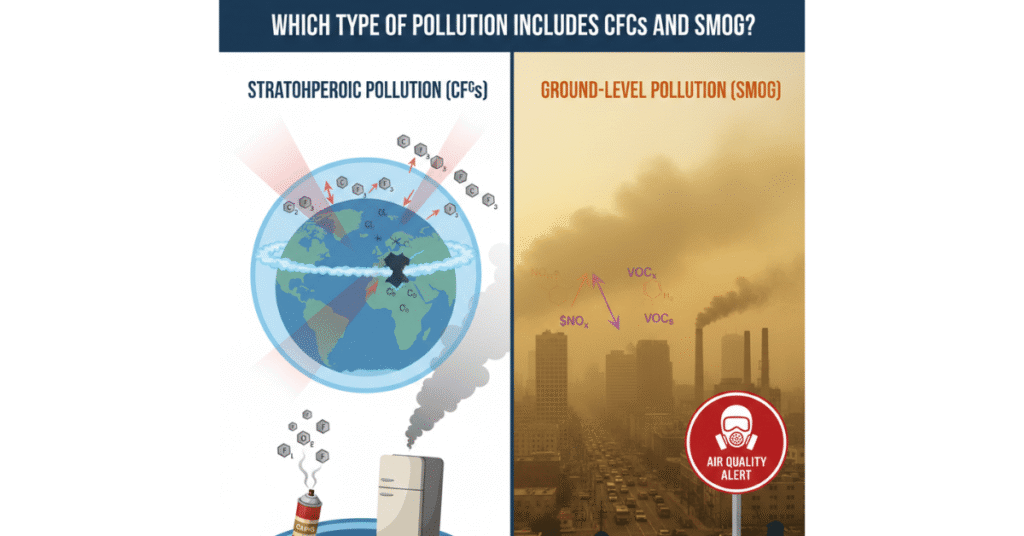

Because human activities have changed the way our planet breathes, pollution is no longer just an environmental issue—it’s a daily reality. If you’ve ever wondered which type of pollution includes CFCs and smog, the short answer is air pollution. But the story doesn’t stop there.
Air pollution is a complex mix of gases, chemicals, and particles that affect everything from human health to the ozone layer. In this article, we’ll break down how chlorofluorocarbons (CFCs) and smog fit into air pollution, why they matter, and what you should know moving forward.
Which Type of Pollution Includes CFCs and Smog?
The correct answer is air pollution.
Both CFCs (chlorofluorocarbons) and smog are forms of air pollutants that contaminate the Earth’s atmosphere. While they behave differently and cause different problems, they share one critical trait: they degrade air quality and harm life on Earth.
Understanding Air Pollution
What Is Air Pollution?
Air pollution occurs when harmful substances are released into the atmosphere in concentrations high enough to cause damage. These pollutants can be:
-
Gases
-
Chemical compounds
-
Fine particles (particulate matter)
Air pollution can be both outdoor (ambient air pollution) and indoor, and it affects urban and rural areas alike.
How CFCs Contribute to Air Pollution
What Are CFCs?
CFCs are man‑made chemicals once widely used in:
-
Refrigerators and air conditioners
-
Aerosol sprays
-
Foam packaging
-
Fire suppression systems
They were popular because they’re stable, non‑toxic, and inexpensive—at least in the short term.
Why Are CFCs Dangerous?
CFCs rise into the upper atmosphere, where they:
-
Break down due to UV radiation
-
Release chlorine atoms
-
Destroy ozone molecules
This process leads to ozone layer depletion, which increases harmful UV radiation reaching Earth.
Even though many countries banned CFCs under the Montreal Protocol, their long lifespan means they’re still present in the atmosphere today.
What Is Smog and Why Is It Harmful?
Types of Smog
Smog is another major component of air pollution and comes in two main forms:
1. Photochemical Smog
-
Common in cities
-
Caused by sunlight reacting with vehicle emissions
-
Contains ozone, nitrogen oxides, and volatile organic compounds (VOCs)
2. Industrial Sulfur Smog
-
Found in industrial areas
-
Results from burning coal and fossil fuels
-
Contains sulfur dioxide and particulate matter
Health and Environmental Impacts of Smog
Smog exposure can lead to:
-
Breathing difficulties
-
Asthma attacks
-
Reduced lung function
-
Eye and throat irritation
-
Damage to crops and vegetation
Why CFCs and Smog Are Classified as Air Pollution
CFCs and smog are grouped under air pollution because they:
-
Contaminate the atmosphere
-
Affect human health
-
Contribute to climate and environmental damage
-
Travel long distances through air currents
While CFCs mainly impact the ozone layer, smog directly affects air quality and respiratory health.
Key Sources of Air Pollution
Common contributors include:
-
Vehicle exhaust
-
Industrial emissions
-
Burning fossil fuels
-
Aerosols and refrigerants
-
Chemical solvents
Reducing these sources plays a major role in improving air quality.
How Air Pollution Affects Daily Life
Air pollution doesn’t just stay in the sky—it follows us everywhere.
-
Children and the elderly are more vulnerable
-
Outdoor activities become unsafe on smoggy days
-
Healthcare costs increase
-
Climate patterns shift over time
This is why understanding which type of pollution includes CFCs and smog is more than an academic question—it’s a real‑world issue.
FAQs: People Also Ask
Which type of pollution includes CFCs and smog?
Air pollution includes both CFCs and smog because they contaminate the atmosphere and harm human health and the environment.
Are CFCs still used today?
Most countries have banned CFCs, but they still exist in the atmosphere due to their long lifespan.
Is smog the same as smoke?
No. Smog is a mixture of smoke, chemicals, and sunlight‑driven reactions, especially in urban areas.
How does air pollution affect health?
It can cause respiratory diseases, heart problems, eye irritation, and worsen existing conditions like asthma.
Can air pollution be reduced?
Yes—through cleaner energy, reduced vehicle emissions, and stricter environmental regulations.
Conclusion
So, which type of pollution includes CFCs and smog? The answer is clear: air pollution. From damaging the ozone layer to affecting everyday breathing, these pollutants highlight how deeply connected human activity is to atmospheric health.
Understanding air pollution is the first step toward making smarter environmental choices. If you want to explore related topics like ozone depletion, climate change, or pollution prevention strategies, now’s the perfect time to dive deeper.