
Because every baby develops at their own pace, parents often find themselves wondering when do babies start crawling and whether their little one is “on track.” Crawling is one of the most exciting milestones in early development, marking a baby’s growing independence and curiosity about the world.
This guide breaks down when babies typically start crawling, how it connects to walking, what signs to look for, and how you can support your baby naturally. Whether your baby is rolling, scooting, or still content lying down, this article will help you understand what’s normal—and when to pay closer attention.
When Do Babies Start Crawling? (Typical Age Range)
Most babies start crawling between 6 and 10 months, but that range is flexible.
Here’s a general timeline many pediatric experts agree on:
-
6–7 months: Early attempts, rocking on hands and knees
-
7–9 months: Traditional crawling or alternative movement styles
-
9–10 months: Confident crawling and faster movement
Because development isn’t linear, some babies crawl earlier, while others skip crawling altogether and move straight to standing or walking.
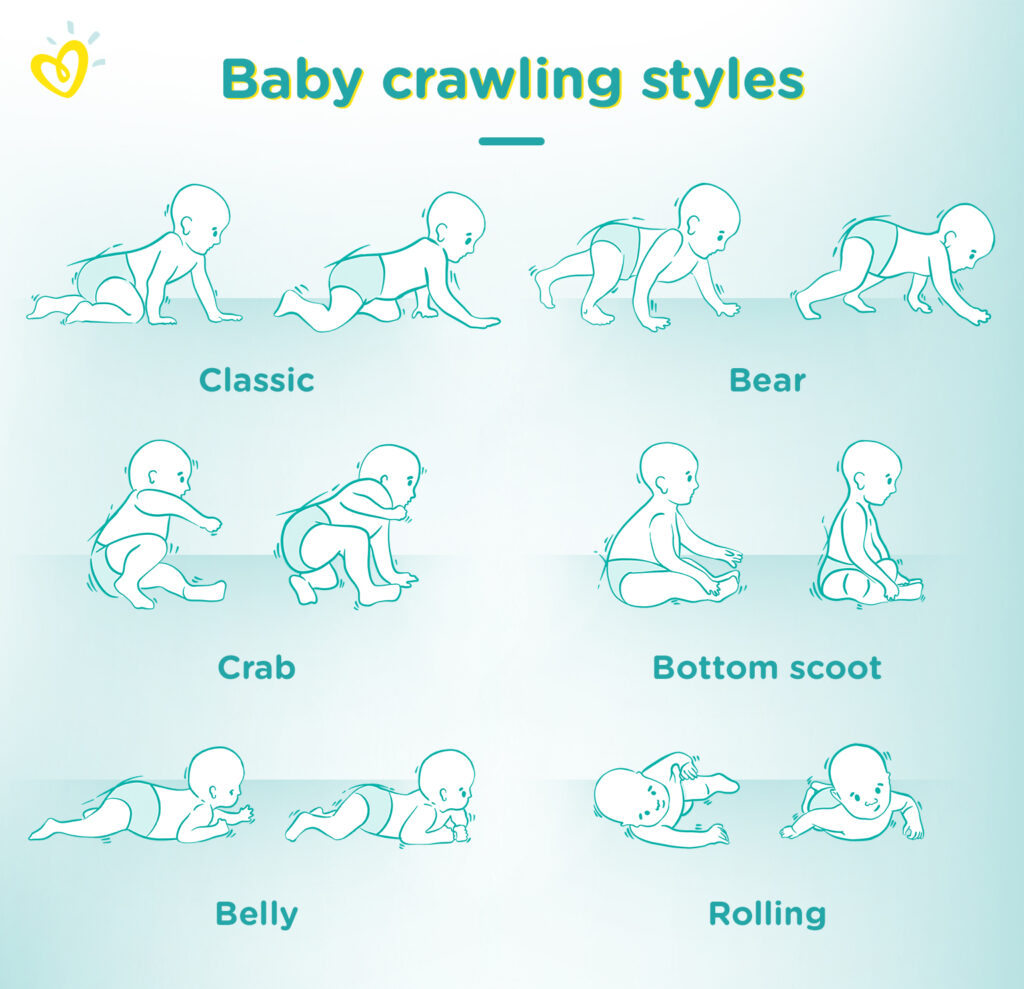
Different Types of Crawling (Yes, There’s More Than One)
Not all crawling looks the same, and that’s completely normal.
Common Crawling Styles
-
Classic hands-and-knees crawl
-
Army crawl (belly on the floor)
-
Bear crawl (hands and feet, no knees)
-
Scooting (moving on the bottom)
-
Rolling as a main form of movement
Because strength and coordination develop differently, babies choose the movement that feels easiest to them.
Signs Your Baby Is Getting Ready to Crawl
Before crawling happens, your baby will usually show a few clear signals.
Pre-Crawling Milestones
-
Pushing up during tummy time
-
Rocking back and forth on hands and knees
-
Sitting without support
-
Strong head and neck control
-
Pivoting or spinning while on the belly
If you notice these behaviors, crawling is likely right around the corner.
When Do Babies Start Crawling and Walking?
Parents often ask when do babies start crawling and walking, but these milestones don’t follow a strict order.
Typical Walking Timeline
-
9–12 months: Pulling up and cruising along furniture
-
12–15 months: First independent steps
-
15–18 months: Confident walking
Because crawling helps build core strength, balance, and coordination, it can support walking—but it’s not required. Some babies walk perfectly well without ever crawling.
Is It Normal If My Baby Isn’t Crawling Yet?
Yes, in many cases, it’s completely normal.
Babies may skip crawling if they:
-
Spend less time on the floor
-
Are highly motivated to stand
-
Prefer scooting or rolling
-
Have longer legs or different muscle patterns
However, if your baby is not attempting any form of movement by 10–12 months, it’s a good idea to check in with a pediatrician.
How to Help Your Baby Learn to Crawl Naturally
You don’t need special equipment—just time, patience, and a little floor space.
Simple Ways to Encourage Crawling
-
Increase supervised tummy time daily
-
Place toys just out of reach
-
Let your baby move barefoot
-
Limit time in walkers or bouncers
-
Get down on the floor and model movement
Because babies learn best through play, keep it fun and pressure-free.
Safety Tips Once Crawling Begins
Crawling changes everything fast.
Baby-Proofing Essentials
-
Cover electrical outlets
-
Secure furniture to walls
-
Block stairs with safety gates
-
Remove small choking hazards
-
Lock cabinets with cleaning supplies
Because mobility increases overnight, baby-proofing early saves stress later.
Frequently Asked Questions (FAQs)
When do babies start crawling exactly?
Most babies begin crawling between 6 and 10 months, but variations are normal.
When do babies start crawling and walking?
Crawling usually comes first, followed by walking between 12 and 18 months.
Is crawling required for healthy development?
No. While helpful, crawling isn’t mandatory if your baby shows other healthy movement patterns.
Can babies crawl at 5 months?
Yes, though it’s early. Strong babies with lots of tummy time sometimes crawl sooner.
Should I worry if my baby skips crawling?
Not usually. But if there’s limited movement overall, consult a pediatrician.
Conclusion
Understanding when do babies start crawling helps ease worry and build confidence as a parent. While the average baby crawls between 6 and 10 months, development isn’t a race—and every baby follows their own path.
Because crawling supports strength, coordination, and curiosity, encouraging safe floor play is one of the best things you can do. If you’d like to go deeper, explore related guides on baby walking milestones, tummy time tips, or childproofing your home to stay one step ahead.