
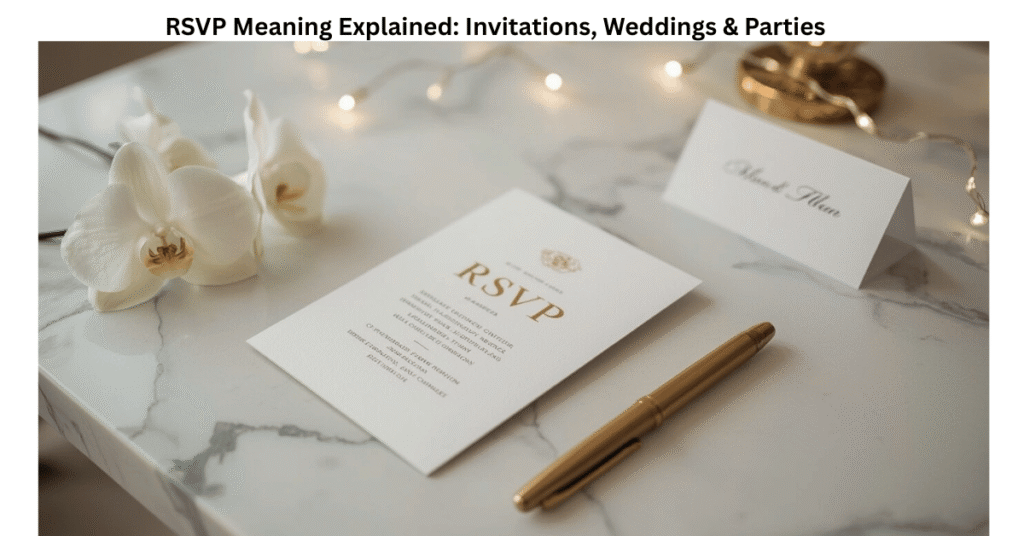

Ever received an invitation that says “RSVP” and wondered what you’re supposed to do next? You’re not alone. The RSVP meaning in English is simple, but it plays a surprisingly important role in events like weddings, parties, and formal gatherings.
In this article, we’ll break down the exact RSVP meaning, explain how it’s used on invitation cards, and show why responding matters more than you might think—especially for weddings and parties.
What Does RSVP Mean in English?
The RSVP meaning in English comes from the French phrase “Répondez s’il vous plaît,” which translates to:
“Please respond.”
In practical terms, RSVP is a polite request asking guests to confirm whether they will attend an event or not. It helps hosts plan food, seating, and overall arrangements.
Why RSVP Is Still Used Today
Even though RSVP is French, it’s widely accepted in English-speaking countries because it sounds formal, respectful, and universally understood in event planning.
RSVP is commonly used for:
-
Weddings
-
Birthday parties
-
Corporate events
-
Formal dinners
-
Baby showers
RSVP Meaning in Invitation Card
When you see RSVP on an invitation card, it’s not just decoration—it’s a request for action.
What It Tells You
An RSVP on an invitation card usually includes:
-
A deadline to respond
-
A phone number, email, or website
-
Sometimes options like Accepts or Declines
Example
RSVP by June 10th
Call or text: 555-123-4567
This means the host needs your response by that date so they can finalize arrangements.
RSVP Meaning in Wedding Card
The RSVP meaning in wedding card is especially important because weddings require precise planning.
Why RSVP Matters for Weddings
Wedding RSVPs help couples plan:
-
Guest seating charts
-
Catering portions
-
Venue capacity
-
Wedding favors
Ignoring a wedding RSVP can lead to unnecessary costs and stress for the couple.
Common Wedding RSVP Formats
-
RSVP cards included with the invitation
-
Online RSVP links
-
Email or phone confirmation
RSVP Meaning Party Invitations
The RSVP meaning party invitations is usually more casual but still important.
For Parties, RSVP Helps With:
-
Food and drinks
-
Party supplies
-
Space management
Some party invites may say:
-
“RSVP if you can make it”
-
“Kindly RSVP”
-
“RSVP for details”
Even casual events rely on RSVP to run smoothly.
How to Respond to an RSVP (The Right Way)
Responding to an RSVP doesn’t have to be complicated. Here’s how to do it properly:
-
Reply before the deadline
-
Be clear — Yes or No
-
Follow the requested method (text, email, card, website)
-
Avoid last-minute changes if possible
If something changes, inform the host as soon as you can.
Common RSVP Terms You Might See
Understanding these related terms can help avoid confusion:
-
Regrets only – Reply only if you’re not attending
-
Plus-one – You may bring a guest
-
Accepts with pleasure – Formal way to say yes
-
Declines with regret – Polite way to say no
FAQs About RSVP Meaning
What does RSVP stand for exactly?
RSVP stands for Répondez s’il vous plaît, meaning “Please respond.”
Is RSVP mandatory?
While not legally mandatory, it’s considered polite and respectful to respond.
Can I RSVP late?
Late RSVPs are discouraged. If unavoidable, contact the host directly.
Is RSVP used only for formal events?
No. RSVP is used for both formal and informal events, including casual parties.
What if I don’t RSVP at all?
Not responding can cause inconvenience and extra cost for the host.
Conclusion: Why RSVP Should Never Be Ignored
Understanding the RSVP meaning in invitation card, weddings, and parties helps you become a more considerate guest. RSVP isn’t just a formality—it’s a small action that makes a big difference for event hosts.
Next time you receive an invitation, take a moment to RSVP on time. It’s polite, professional, and always appreciated.